
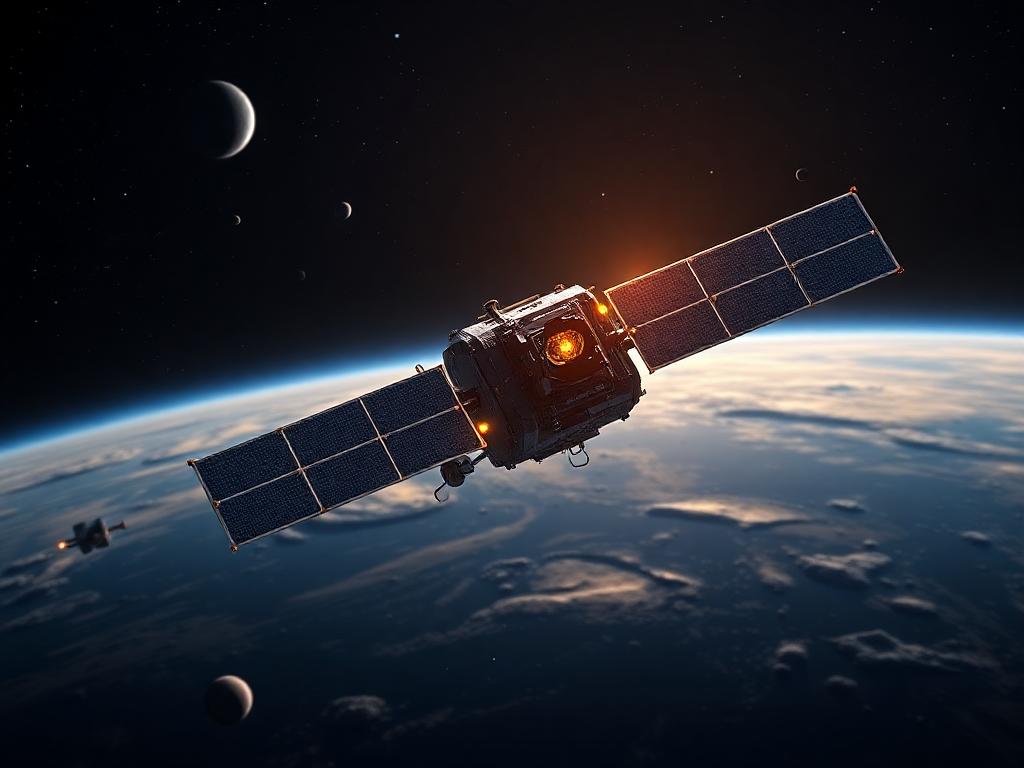
Satellite Design to Detect and Track Small Space Debris Under Development
A University of Alaska Fairbanks scientist is contributing to a U.S. government initiative focused on designing a satellite and specialized instruments capable of detecting space debris as small as 1 centimeter. Currently, debris of this size is undetectable from the ground, posing a significant threat to satellites and spacecraft operating in low-Earth orbit. The project aims to equip future satellites with the technology needed to avoid collisions with this hazardous space junk, which travels at approximately 17,500 mph, with the impact energy of a small grenade. Space debris consists of defunct satellites, spent rocket stages, collision fragments, and other human-made objects. Paul Bernhardt, a UAF Geophysical Institute research professor, along with colleagues from the University of Calgary, has developed a method to determine the distance and approach angle of small objects relative to a satellite or spacecraft. This method utilizes the discovery that orbiting objects create waves as they pass through naturally occurring plasma disturbances (striations) along Earth’s magnetic field lines. Bernhardt is also designing the ‘Space Debris Hunter’ satellite to carry these instruments for initial testing. The satellite will use onboard sensors to simultaneously measure electric and magnetic wave fields, detecting signals from space debris. Analyzing changes in signal frequency over time will allow researchers to determine the direction and distance to the debris, predicting its future path and enabling satellites to avoid collisions. The U.S. debris-tracking program estimates over 100 million objects larger than 1 millimeter orbit Earth, but less than 1% of potentially mission-ending debris is currently tracked, fueling increased interest in tracking smaller debris.